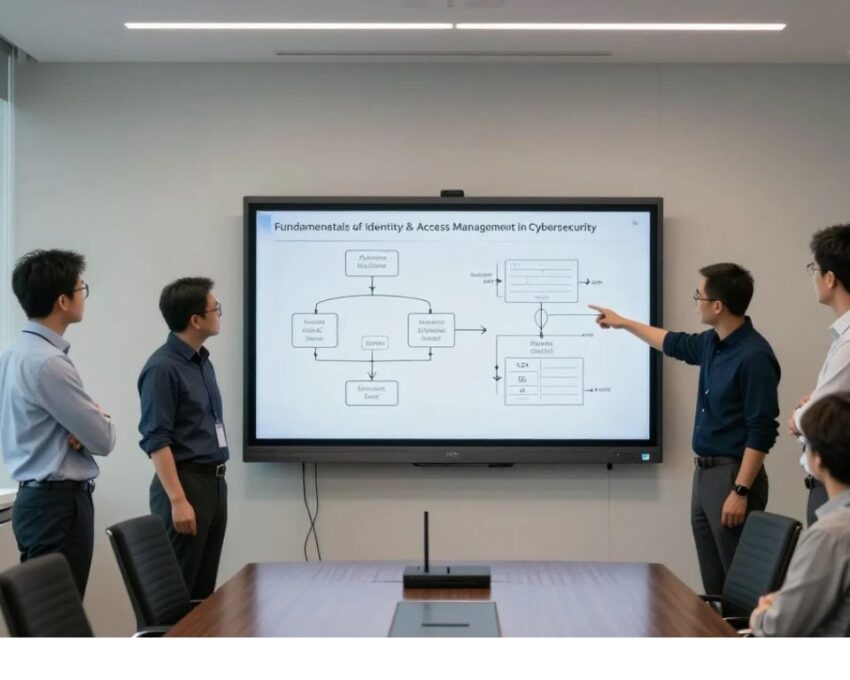
In today’s digital world, data is one of the most valuable assets for individuals and organizations. With the rapid growth of cloud computing, remote work, and online services, protecting digital identities has become more important than ever. Cybercriminals constantly try to exploit weak authentication systems to gain unauthorized access to sensitive information.
This is where Identity & Access Management (IAM) plays a crucial role. IAM is a core part of modern cybersecurity that ensures only the right individuals have access to the right resources at the right time.
In this article, we will explore the fundamentals of Identity & Access Management in cybersecurity, its importance, components, benefits, and best practices.
What is Identity & Access Management (IAM)?
Identity & Access Management (IAM) is a cybersecurity framework that manages digital identities and controls user access to systems, applications, and data.
In simple terms, IAM answers three important questions:
- Who are you? (Identity)
- What are you allowed to access? (Permissions)
- How do you prove it? (Authentication)
IAM ensures that only authorized users can access specific resources while preventing unauthorized access.
For example, in a company, employees in the HR department should only access HR-related data, not financial systems. IAM makes this possible.
Why IAM is Important in Cybersecurity
IAM is one of the most critical components of cybersecurity because it protects digital identities and sensitive data from unauthorized access.
Here are the key reasons why IAM is important:
- Prevents unauthorized access to systems and data
- Reduces risk of data breaches and cyberattacks
- Ensures compliance with security regulations (GDPR, HIPAA, etc.)
- Supports secure remote work and cloud environments
- Improves operational efficiency and user management
Without IAM, organizations would struggle to control who accesses their systems, increasing the risk of cyber threats.
Core Components of Identity & Access Management
IAM consists of several key components that work together to secure digital environments.
1. Identity Management
Identity management involves creating, maintaining, and deleting user identities in a system.
Each user is assigned a unique digital identity that includes credentials such as username, email, and role.
2. Authentication
Authentication is the process of verifying a user’s identity before granting access.
Common authentication methods include:
- Password-based authentication
- Multi-Factor Authentication (MFA)
- Biometric authentication (fingerprint, face recognition)
- One-time passwords (OTP)
3. Authorization
Authorization determines what an authenticated user is allowed to do.
For example, an employee may log in successfully (authentication) but only be allowed to view certain files (authorization).
4. Access Control
Access control defines rules and policies that restrict or allow user access to resources.
Common models include:
- Role-Based Access Control (RBAC)
- Attribute-Based Access Control (ABAC)
- Mandatory Access Control (MAC)
5. User Provisioning and Deprovisioning
Provisioning involves granting access to new users, while deprovisioning removes access when users leave the organization.
This ensures that only active users have access to systems.
How Identity & Access Management Works
IAM works through a structured process that ensures secure access to resources.
Step 1: User Login
A user attempts to access a system using credentials.
Step 2: Identity Verification
The system verifies the user’s identity using authentication methods.
Step 3: Access Check
The system checks whether the user has permission to access the requested resource.
Step 4: Access Granted or Denied
If the user is authorized, access is granted; otherwise, it is denied.
Step 5: Activity Monitoring
IAM systems continuously monitor user activity for suspicious behavior.
Types of Identity & Access Management Solutions
IAM solutions are available in different forms depending on organizational needs.
1. On-Premises IAM
Installed and managed within an organization’s internal infrastructure.
2. Cloud-Based IAM
Delivered as a service through cloud platforms like AWS IAM or Microsoft Entra ID.
3. Hybrid IAM
A combination of both on-premises and cloud-based IAM systems.
Benefits of Identity & Access Management
IAM provides several advantages for organizations and users.
1. Strong Security
Protects sensitive data from unauthorized access and cyber threats.
2. Reduced Risk of Data Breaches
Ensures only authorized users can access critical systems.
3. Improved User Experience
Simplifies login processes with single sign-on (SSO) solutions.
4. Better Compliance
Helps organizations meet regulatory requirements.
5. Centralized Management
Allows IT teams to manage all user identities from a single platform.
Common IAM Security Threats
Despite its benefits, IAM systems are often targeted by cybercriminals.
1. Weak Passwords
Simple passwords can be easily guessed or cracked.
2. Phishing Attacks
Attackers trick users into revealing login credentials.
3. Credential Theft
Stolen usernames and passwords are used to gain unauthorized access.
4. Insider Threats
Employees may misuse their access privileges intentionally or accidentally.
5. Privilege Escalation
Attackers gain higher-level access than they are supposed to have.
IAM in Modern Cybersecurity
In modern cybersecurity, IAM plays a central role in protecting digital systems. It is closely integrated with advanced security models like:
- Zero Trust Architecture
- Cloud Security Platforms
- Endpoint Security Systems
- Security Information and Event Management (SIEM)
Zero Trust models especially rely heavily on IAM, as they verify every user and device before granting access, regardless of location.
Best Practices for Identity & Access Management
To strengthen IAM security, organizations should follow these best practices:
- Use multi-factor authentication (MFA) for all accounts
- Implement strong password policies
- Apply the principle of least privilege (PoLP)
- Regularly review and update user access rights
- Monitor user activity for suspicious behavior
- Disable inactive accounts immediately
- Use centralized IAM solutions for better control
These practices help reduce security risks and improve system protection.
Challenges in Identity & Access Management
Even though IAM is essential, it comes with several challenges:
- Managing large numbers of user identities
- Complex cloud and hybrid environments
- Integration with legacy systems
- Increasing cyber threats and phishing attacks
- User resistance to security measures
Organizations must continuously improve IAM systems to handle these challenges effectively.
The Future of Identity & Access Management
IAM is evolving rapidly with advancements in technology. Future trends include:
- Artificial Intelligence (AI)-based identity verification
- Passwordless authentication systems
- Behavioral biometrics
- Adaptive and risk-based authentication
- Fully automated identity management systems
These innovations will make IAM more secure, efficient, and user-friendly.
Conclusion
Fundamentals of Identity & Access Management in cybersecurity are essential for protecting digital identities and ensuring secure access to systems and data. As cyber threats continue to grow, IAM has become a critical part of every organization’s security strategy.
By managing identities, controlling access, and continuously monitoring user activity, IAM helps prevent unauthorized access and data breaches. When combined with modern cybersecurity technologies like Zero Trust and cloud security, IAM provides a strong foundation for digital protection.