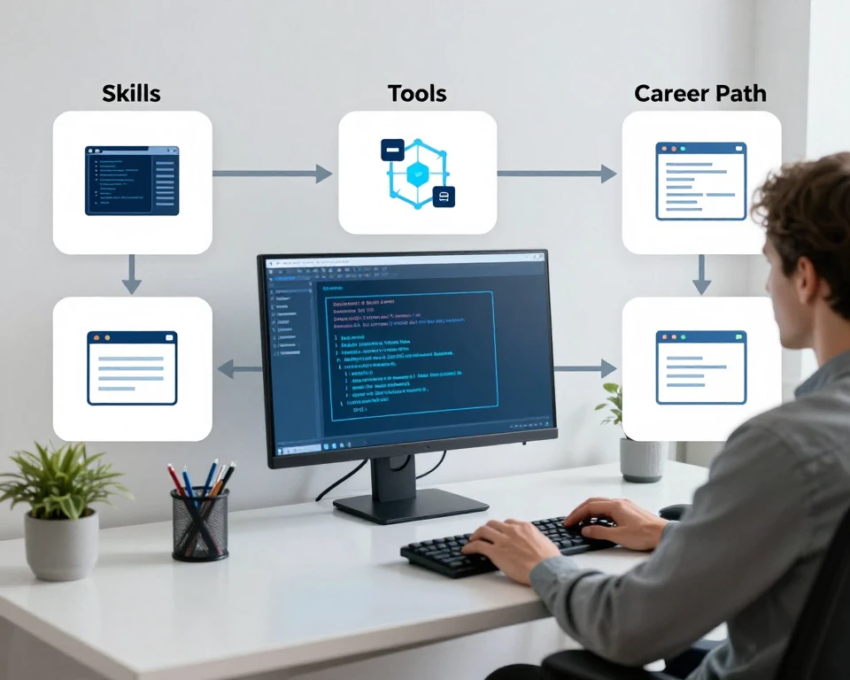
Frontend Development is one of the most exciting and in-demand fields in the technology industry. Every website and web application you interact with—from online stores to social media platforms—relies on frontend development to deliver an engaging and user-friendly experience. As businesses continue to strengthen their online presence, skilled frontend developers are more valuable than ever.
If you’re considering a career in web development or simply want to understand how websites are built, this comprehensive guide will explain frontend development, the essential skills you need, the most popular tools, and the career opportunities available in 2026.
What is Frontend Development?
Frontend development is the process of building the visual and interactive parts of a website or web application. It focuses on everything users see and interact with directly in their web browsers.
A frontend developer transforms design concepts into fully functional web pages that are responsive, accessible, and easy to use.
Frontend development includes:
- Website layouts
- Navigation menus
- Buttons
- Images and videos
- Forms
- Animations
- Interactive elements
- Responsive designs
The goal is to create a seamless user experience across desktops, tablets, and smartphones.
Why is Frontend Development Important?
Frontend development plays a critical role in the success of any website. A visually appealing and user-friendly interface helps visitors stay engaged, improves customer satisfaction, and increases conversion rates.
Benefits of frontend development include:
- Better user experience
- Faster website performance
- Mobile responsiveness
- Improved accessibility
- Higher search engine rankings
- Increased customer engagement
- Professional website appearance
A well-developed frontend encourages users to spend more time on a website and interact with its content.
Core Skills Every Frontend Developer Needs
To become a successful frontend developer, you need to master several essential skills.
1. HTML (HyperText Markup Language)
HTML is the foundation of every webpage. It defines the structure and content of a website.
HTML is used to create:
- Headings
- Paragraphs
- Images
- Links
- Tables
- Forms
- Lists
- Videos
Learning HTML is the first step toward becoming a frontend developer.
2. CSS (Cascading Style Sheets)
CSS controls the appearance of web pages. It allows developers to create attractive layouts and responsive designs.
CSS is responsible for:
- Colors
- Fonts
- Backgrounds
- Spacing
- Animations
- Responsive layouts
Modern CSS frameworks include:
- Bootstrap
- Tailwind CSS
- Bulma
Understanding Flexbox and CSS Grid is also essential for creating modern layouts.
3. JavaScript
JavaScript makes websites interactive and dynamic.
With JavaScript, developers can create:
- Interactive forms
- Image sliders
- Dropdown menus
- Pop-up windows
- Live search
- Dynamic content
- Interactive maps
JavaScript is one of the most important programming languages in frontend development.
4. Responsive Web Design
Users access websites from different devices, including smartphones, tablets, laptops, and desktops.
Frontend developers use responsive design techniques to ensure websites adapt automatically to different screen sizes.
Key responsive design techniques include:
- Media queries
- Flexible layouts
- Responsive images
- Mobile-first design
Responsive websites improve user experience and SEO performance.
5. Version Control
Version control systems help developers track changes and collaborate on projects.
Git is the most widely used version control system.
Developers use Git to:
- Save project history
- Manage code changes
- Work with teams
- Restore previous versions
GitHub and GitLab are popular platforms for hosting code repositories.
Popular Frontend Frameworks and Libraries
Modern frontend development relies heavily on frameworks and libraries that simplify development.
React
React is one of the most popular JavaScript libraries for building user interfaces.
Features include:
- Component-based architecture
- Virtual DOM
- Fast rendering
- Reusable code
React is widely used by startups and large technology companies.
Angular
Angular is a powerful frontend framework developed for building enterprise-level applications.
Advantages include:
- Two-way data binding
- Dependency injection
- Built-in routing
- TypeScript support
Vue.js
Vue.js is known for its simplicity and flexibility.
It offers:
- Easy learning curve
- Fast performance
- Lightweight architecture
- Excellent documentation
Many developers choose Vue for small and medium-sized projects.
Essential Frontend Development Tools
Professional frontend developers use various tools to improve productivity and code quality.
Code Editors
Popular editors include:
- Visual Studio Code
- Sublime Text
- WebStorm
Browser Developer Tools
Modern browsers provide built-in developer tools for:
- Debugging code
- Inspecting HTML
- Editing CSS
- Measuring performance
Design Tools
Frontend developers often collaborate with designers using:
- Figma
- Adobe XD
- Sketch
These tools help convert design mockups into responsive websites.
Package Managers
Package managers simplify dependency management.
Popular options include:
- npm
- Yarn
- pnpm
Build Tools
Build tools automate repetitive tasks.
Examples include:
- Vite
- Webpack
- Parcel
These tools improve development speed and optimize production builds.
Frontend Development Best Practices
Writing clean and maintainable code is essential for long-term success.
Best practices include:
- Write semantic HTML
- Use reusable components
- Optimize website speed
- Minimize CSS and JavaScript files
- Compress images
- Follow accessibility guidelines
- Test websites on multiple devices
- Keep code organized and documented
Following these practices results in high-quality websites.
SEO and Frontend Development
Search Engine Optimization (SEO) is closely connected to frontend development.
Frontend developers should optimize websites by:
- Using proper heading tags
- Writing descriptive image alt text
- Improving page speed
- Creating mobile-friendly layouts
- Implementing structured data
- Optimizing internal linking
- Using clean URLs
SEO-friendly frontend development helps websites rank higher in search engine results.
Career Path in Frontend Development
Frontend development offers excellent career opportunities for beginners and experienced professionals alike.
Common career roles include:
Junior Frontend Developer
Builds basic web pages and assists senior developers.
Frontend Developer
Develops responsive websites and interactive web applications.
Senior Frontend Developer
Leads frontend architecture, mentors junior developers, and optimizes application performance.
UI Developer
Focuses on implementing visually appealing user interfaces.
Frontend Architect
Designs large-scale frontend systems and establishes coding standards.
Freelance Frontend Developer
Works independently with clients worldwide on various web projects.
Many frontend developers eventually become full stack developers by learning backend technologies.
Salary and Job Demand
Frontend development continues to be one of the fastest-growing careers in technology.
Companies across industries—including healthcare, finance, education, e-commerce, and entertainment—need frontend developers to create modern digital experiences.
Factors that influence salary include:
- Experience level
- Technical skills
- Location
- Company size
- Portfolio quality
Remote work opportunities have also expanded, allowing developers to work with clients and companies around the world.
How to Become a Frontend Developer
If you’re starting from scratch, follow this learning roadmap:
Step 1
Learn HTML fundamentals.
Step 2
Master CSS and responsive design.
Step 3
Learn JavaScript thoroughly.
Step 4
Build small projects like landing pages and portfolios.
Step 5
Learn Git and GitHub.
Step 6
Choose a frontend framework such as React.
Step 7
Practice API integration.
Step 8
Learn website optimization techniques.
Step 9
Create a professional portfolio website.
Step 10
Apply for internships, freelance projects, or entry-level frontend developer positions.
Consistent practice and real-world projects are the fastest way to improve your skills.
Future of Frontend Development
Frontend development continues to evolve with new technologies and user expectations.
Key trends shaping the future include:
- AI-powered user interfaces
- Progressive Web Apps (PWAs)
- WebAssembly
- Server-side rendering
- Component-driven development
- Motion UI and advanced animations
- Improved accessibility standards
- Faster JavaScript frameworks
Developers who stay updated with modern technologies will remain competitive in the job market.
Conclusion
Frontend development is a rewarding career that combines creativity with technical expertise. It focuses on building visually appealing, responsive, and interactive websites that deliver outstanding user experiences. By mastering HTML, CSS, JavaScript, modern frameworks, and essential development tools, beginners can build a strong foundation for long-term success. Whether you aim to work for a technology company, become a freelancer, or launch your own digital products, frontend development offers countless opportunities for growth. With continuous learning, practical experience, and a strong portfolio, you can build a successful career in one of the most dynamic fields of web development.